
Snooker Shoot-Out Rules Explained: The Shot Clock, the 15-to-10 Switch, and Time Fouls
By Jibran Khan · 1 September 2026 · Guides
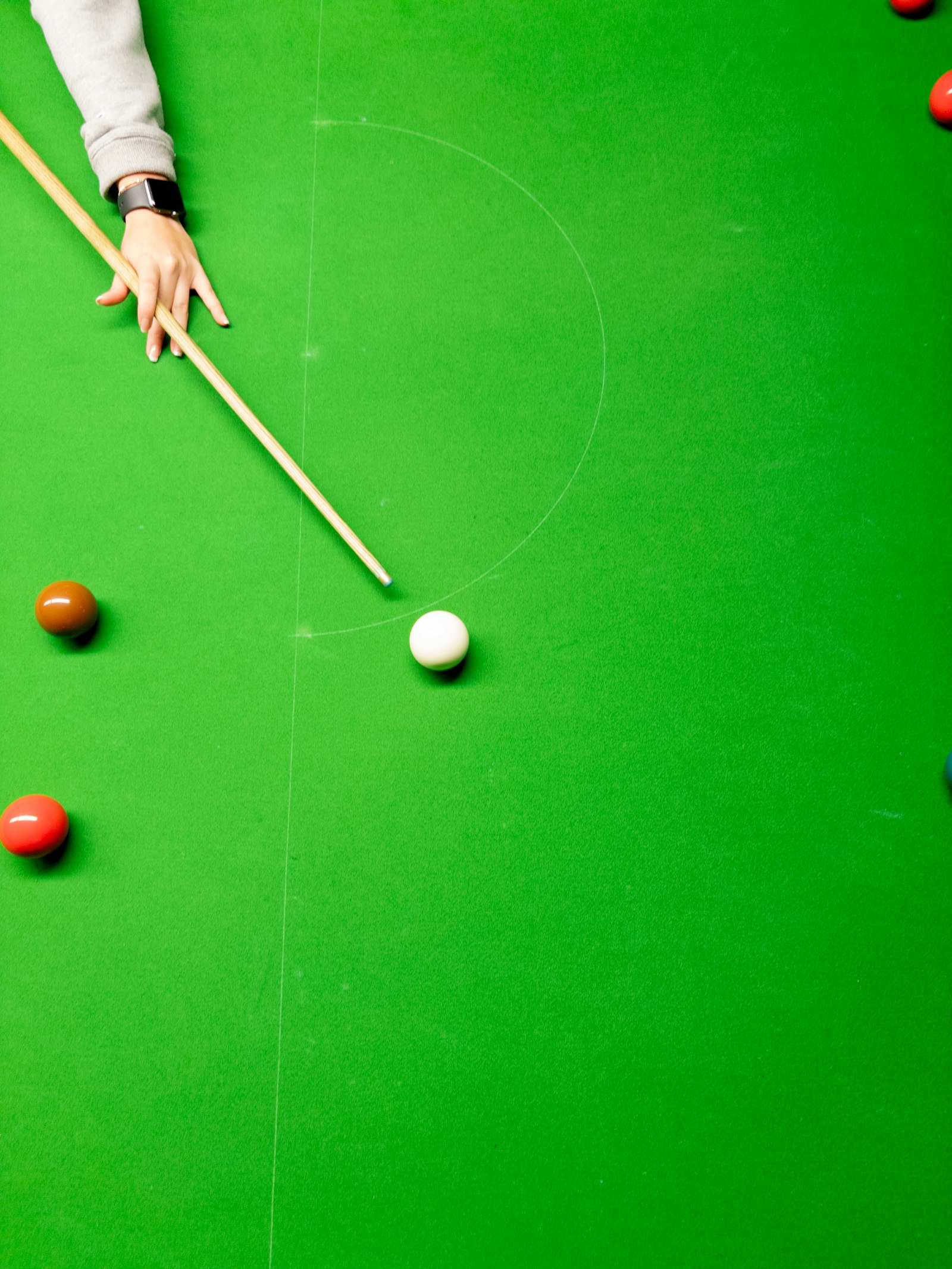
Snooker Shoot-Out is played to a hard 10-minute frame clock with no extra time - whoever leads on points when it hits zero wins the frame. A shot clock forces the pace too: 15 seconds per shot for the first 5 minutes, tightening to 10 seconds for the rest of the frame. Let the shot clock reach zero and it's a foul, with a stricter 5-point minimum than normal snooker. A frame still level when the clock expires goes to a sudden-death blue-ball shootout.
How long is a Shoot-Out frame?
Every frame is capped at 10 minutes on the clock, full stop. There's no way to play it long and no extra time for a close finish - whoever is ahead on points the instant the frame clock reaches zero takes the frame. That single rule is what makes Shoot-Out feel completely different to referee and to watch: every pot has to weigh up against the clock, not just the position on the table.
The 15-second and 10-second shot clock phases
The shot clock starts each frame at 15 seconds per shot. Once 5 minutes of frame time have elapsed - so with 5 minutes left on the frame clock - it automatically tightens to 10 seconds for the rest of the frame. It's not a judgment call for the referee to make mid-frame; the switch happens on the clock at exactly the same point, frame after frame.
What counts as a shot-clock foul
Letting the shot clock run out is a time foul, awarded to the opponent. Shoot-Out raises the usual snooker foul minimum for this: instead of the standard 4 points, a time foul is worth whichever is larger of 5 points or the value of the ball that was on when the clock expired - so a missed red is still just a 5-point foul, but a missed black costs the full 7.
Every shot has to reach a cushion
There's a second rule that keeps Shoot-Out from being gamed: on every shot, either a ball has to be potted or some ball has to reach a cushion - the cue ball included. Do neither and it's a foul, even if nothing was touching anything illegal. It's what stops a player who's ahead from just nudging the cue ball a few inches to burn clock for the rest of the frame; the format simply doesn't allow a shot that goes nowhere.
Fouls give ball in hand - and the miss rule is off
Shoot-Out changes what a foul actually costs beyond the points. Every foul - not just a time foul - gives the incoming player ball in hand: they can place the cue ball anywhere on the table, not just play it from where it stopped. There's no "play again" request either, because the miss rule doesn't apply in Shoot-Out at all. Between ball in hand and no miss calls, there's no such thing as a safe foul - leaving a good snooker is worth nothing if your opponent can simply pick the cue ball up and place it wherever they like.
What happens if the score is tied
If the frame clock hits zero with the scores level, Shoot-Out doesn't decide it on the clock - it goes to a sudden-death blue-ball shootout, played out live at the table under normal tournament rules rather than simulated or decided any other way. The referee simply records who wins that shootout and the frame closes from there.
| Rule | Shoot-Out | Standard snooker |
|---|---|---|
| Frame length | 10 minutes on the clock, hard stop | No time limit |
| Shot clock | 15s (first 5 min), then 10s | None |
| Minimum foul value | 5 points | 4 points |
| Every shot must | Pot a ball or reach a cushion | No such requirement |
| On a foul | Ball in hand, anywhere on the table | Play from where it lies, or ask opponent to play again |
| Miss rule | Does not apply | Applies |
| Tied frame | Sudden-death blue-ball shootout | Doesn't apply - frames don't end tied |
How SnookerFlow handles it for you
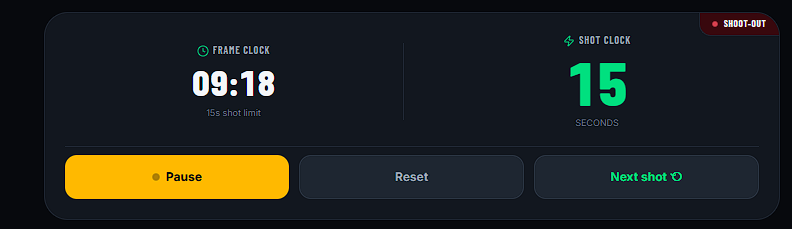
Pick Shoot-Out when you set up a match and the referee pad runs both clocks automatically - the 15-to-10 step-down fires on its own with an audible countdown and no manual switch to remember, and a time foul is scored at the correct minimum without you doing the maths mid-frame. It's free on every plan, including the free tier. See Choosing a match format for how to select it, or The referee pad for what scoring a live frame looks like.